
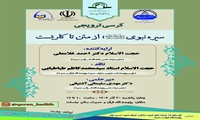
The promotional academic chair entitled The Prophetic Biography (peace be upon him and his family): From Text to Application will be held
Coinciding with Research Week, the Institute of Quran and Hadith, in cooperation with the Association of Humanities–Islamic Research Institutes and the Ministry of Science, Research, and Technology, will organize this event
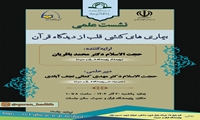
The scientific session entitled Functional Heart Diseases from the Perspective of the Quran will be held
Coinciding with Research Week, the Institute of Quran and Hadith, in cooperation with the Association of Humanities–Islamic Research Institutes and the Ministry of Science, Research, and Technology, will organize this event
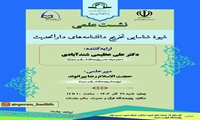
The scientific session entitled Methodology for Identifying the Extraction of Dar al-Hadith Encyclopedias will be held
Coinciding with Research Week, the Institute of Quran and Hadith, in cooperation with the Association of Humanities–Islamic Research Institutes and the Ministry of Science, Research, and Technology, will organize this event
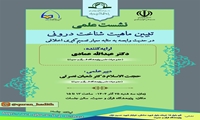
The scientific session entitled Explaining the Nature of ‘Inner Cognition’ in the Hadith of Wabisa as a Criterion for Ethical Decision-Making will be held
Coinciding with Research Week, the Institute of Quran and Hadith, in cooperation with the Association of Humanities–Islamic Research Institutes and the Ministry of Science, Research, and Technology, will organize this event
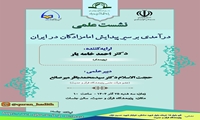
The scientific session entitled An Introduction to the Emergence of Imamzadehs in Iran will be held
Coinciding with Research Week, the Institute of Quran and Hadith, in cooperation with the Association of Humanities–Islamic Research Institutes and the Ministry of Science, Research, and Technology, will organize this event
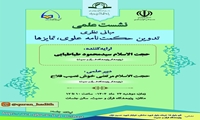
The scientific session entitled Theoretical Foundations of Compiling the Alawi Wisdom Encyclopedia: Distinctions will be held
Coinciding with Research Week, the Institute of Quran and Hadith, in cooperation with the Association of Humanities–Islamic Research Institutes and the Ministry of Science, Research, and Technology, will organize this event
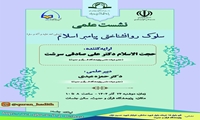
The scientific session entitled The Psychological Conduct of the Prophet of Islam (peace be upon him and his family) will be held
Coinciding with Research Week, the Institute of Quran and Hadith, in cooperation with the Association of Humanities–Islamic Research Institutes and the Ministry of Science, Research, and Technology, will organize this event
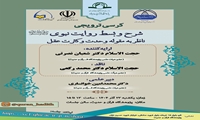
The promotional academic chair entitled Explanation and Expansion of the Prophetic Narrative (peace be upon him and his family) with Reference to the Concept of Unity and Multiplicity of Intellect will be held
Coinciding with Research Week, the Institute of Quran and Hadith, in cooperation with the Association of Humanities–Islamic Research Institutes and the Ministry of Science, Research, and Technology, will organize this event
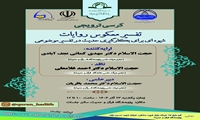
The promotional academic chair entitled Reverse Interpretation of Narrations as a Method for Employing Hadith in Thematic Exegesis will be held
Coinciding with Research Week, the Institute of Quran and Hadith, in cooperation with the Association of Humanities–Islamic Research Institutes and the Ministry of Science, Research, and Technology, will organize this event.
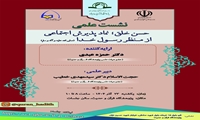
The scientific session entitled Good Morals: A Symbol of Social Acceptance from the Perspective of the Prophet (peace be upon him and his family) will be held
Coinciding with Research Week, the Institute of Quran and Hadith, in cooperation with the Association of Humanities–Islamic Research Institutes and the Ministry of Science, Research, and Technology, will organize this event