

The Knowledge of God in the Thought of Martyr Beheshti (May He Rest in Peace)
A special scientific session entitled “A Tribute to the Theological Thought of Martyr Ayatollah Beheshti (May He Rest in Peace)” was held to examine his theological and doctrinal views, in cooperation with the Quran and Hadith Research Institute, the Association of Islamic Theology of the Seminary, and the Judicial Research Institute.
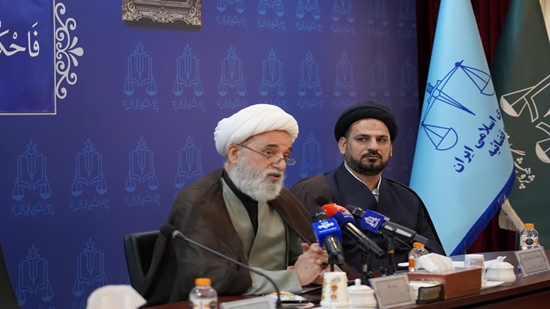
According to the Public Relations Department of the Quran and Hadith Research Institute, Hojjat al-Islam wa al-Muslimin Dr. Reza Berenjkar, President of the Quran and Hadith Research Institute and President of the Association of Islamic Theology of the Seminary, speaking at the scientific session “A Tribute to the Theological Thought of Martyr Ayatollah Beheshti (May He Rest in Peace),” referred to the series of sessions dedicated to honoring the theological thought of contemporary thinkers. He stated:
“In its new term, the Association of Islamic Theology has decided to examine the theological thought of figures who have established expertise and lasting contributions in this field. So far, tribute sessions have been held on the theological thought of Ayatollah Mesbah Yazdi, Ayatollah Safi Golpaygani, and Ayatollah Reyshahri. This session is also dedicated to examining the theological thought of Martyr Ayatollah Beheshti (May he rest in peace). Further sessions will also be held on the theological thought of Martyr Sayyid Muhammad Baqir al-Sadr and the Supreme Leader of the Islamic Revolution.”
Hojjat al-Islam wa al-Muslimin Dr. Reza Berenjkar, noting that Martyr Beheshti was a comprehensive thinker with expertise across various disciplines, added:
“Whatever field Martyr Beheshti entered, he addressed it with an ijtihadi and intellectual approach. He was a jurist, a scholar of Islamic legal theory, a theologian, a philosopher, a teacher of ethics, a politician, and an economist; he was an authority in all these fields.”
Referring to Martyr Beheshti’s book God from the Perspective of the Quran, the President of the Quran and Hadith Research Institute said:
“This book is one of his most important works on the knowledge of God. It seeks to derive doctrinal discussions directly from the text of the Quran, rather than imposing previously accepted views on the Quranic verses.”
He continued:
“Martyr Beheshti begins his discussion by explaining that the Quran’s doctrinal teachings are its most fundamental teachings and establish the foundations of religious beliefs. Nevertheless, many thinkers who have turned to the Quran have done so with the aim of making the Quran conform to their own beliefs and preconceptions. In contrast, one should study the Quran systematically, without preconceived judgments, and with the aim of understanding the Quran itself.”
He further explained that, in his discussion of proving the existence of God, Martyr Beheshti criticizes Allameh Tabatabaei’s view that the Quran does not address the very existence of God, but only introduces and establishes His attributes. Martyr Beheshti maintains that some Quranic verses do address the proof of God’s existence. One example is the verse: “Is there any doubt about Allah, the Originator of the heavens and the earth?” The phrase “the Originator of the heavens and the earth” can be taken as an indication that the verse establishes the existence of the Creator and Originator through the created and originated world.
Referring to the place of innate disposition (fitrah) in Martyr Beheshti’s thought, the President of the Association of Islamic Theology of the Seminary stated:
“Martyr Beheshti considers the divine innate disposition one of the clear proofs of the self-evident nature of the knowledge of God. He believed that knowledge of God is embedded in human nature and is therefore innate. In his examination of the verse concerning the primordial covenant, he regards it as referring to a stage of human existence in which human beings knew God and acknowledged His Lordship. This knowledge forms the foundation of our knowledge of God in this world. A person may deny this knowledge or become heedless of it, but the fundamental reality of knowing God does not disappear, and the Quran also emphasizes this truth.”
Hojjat al-Islam wa al-Muslimin Dr. Berenjkar emphasized:
“From Martyr Beheshti’s perspective, reason and innate disposition are two complementary paths to attaining knowledge of God. The Quran guides human beings toward faith and divine knowledge by drawing on these two capacities. Accordingly, Martyr Beheshti maintains that the Quran first directs human attention to the oneness of the Creator, then leads people to affirm divine unity in creation, command, and governance, and ultimately to divine unity in worship and obedience.”
He added:
“Martyr Beheshti regards God as both the One who brings about causes and the One who renders them ineffective. He believes that natural causality operates by divine ordainment and that this ordainment changes in the case of miracles, as illustrated by the incident of the fire and Prophet Abraham. Regarding the divine names and attributes, he maintains that all our descriptions and attributes of God must avoid both negation and the denial of divine attributes on the one hand, and anthropomorphism on the other. Even the most excellent names and attributes fall short of adequately describing God’s infinite existence.”
It is worth noting that the session “A Tribute to the Theological Thought of Martyr Ayatollah Beheshti (May He Rest in Peace)” was held with the participation and presentations of Hojjat al-Islam wa al-Muslimin Dr. Hadi Sadeghi, Deputy Head of the Judiciary and President of the National Dispute Resolution Center; Hojjat al-Islam wa al-Muslimin Dr. Reza Berenjkar, President of the Quran and Hadith Research Institute and President of the Association of Islamic Theology of the Seminary; Hojjat al-Islam Dr. Seyyed Ali Hosseinizadeh, faculty member of the Quran and Hadith Research Institute; Hojjat al-Islam Dr. Mohammad Jafar Rezaei, faculty member of the Quran and Hadith Research Institute; and Dr. Ali Kazemi, President of the Judicial Research Institute.
The session was held on Monday, 8 Tir 1405, from 9:30 a.m. to 11:30 a.m., at the conference hall of the Judicial Research Institute in Tehran.
To receive news and programs from the Research Institute of the Quran and Hadith via the Eitaa messenger:
https://eitaa.com/quran_hadith
Original Source of the News
