

Imamate: The of Social Guidance in the Thought of Martyr Beheshti
A special academic session entitled “Commemorating the Theological Thought of the Martyred Ayatollah Beheshti (may he rest in peace)” was held to examine the theological and doctrinal ideas of Martyr Beheshti, in cooperation with the Quran and Hadith Research Institute, the Association of Islamic Theology of the Seminary, and the Judicial Research Institute.
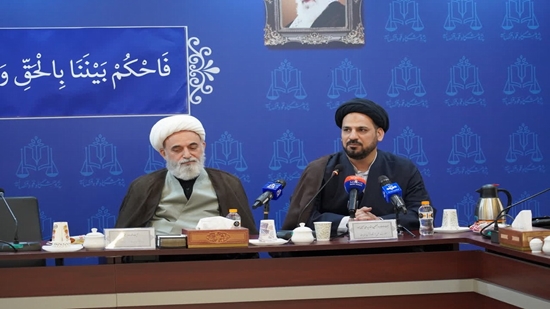
According to the Public Relations Department of the Quran and Hadith Research Institute, Hojjat al-Islam Dr. Seyyed Ali Hosseinizadeh, another speaker at the academic session entitled “Commemorating the Theological Thought of Martyr Ayatollah Dr. Beheshti,” addressed the topic of “Imamate and Leadership (Understanding the Guide) in the Thought of Martyr Beheshti.” He explained the position of Imamate as one of the most fundamental pillars of this prominent thinker's political thought, stating: “Martyr Beheshti regarded Imamate as more than a doctrinal and historical principle; he viewed it as a theory for guiding and governing Islamic society.”
Explaining that Martyr Beheshti introduced the concept of “understanding the guide” as the key to understanding Islamic political thought, he said: “From his perspective, after knowing God and recognizing the Prophet, the most important issue is identifying a leader who is worthy of leadership. This is because a society that does not understand the criteria for choosing its leader will be exposed to deviation, despotism, and division.”
Dr. Hosseinizadeh noted that Martyr Beheshti regarded Imamate as the continuation of the Prophet’s mission (peace and blessings be upon him and his family) in guiding society. He added: “In this intellectual framework, the Imam is not merely a political ruler. Before that, he is the intellectual guide, moral educator, and social administrator of the community. His mission is to guide people toward growth, justice, and perfection.”
He emphasized: “From Martyr Beheshti’s perspective, Imamate is not limited to explaining the virtues of the Ahl al-Bayt (peace be upon them) or examining the historical events following the Prophet’s passing (peace and blessings be upon him and his family). Rather, it responds to society’s enduring need for righteous and divinely guided leadership. For this reason, he regards Imamate as a social and civilizational institution that plays a fundamental role in preserving religious identity and strengthening the cohesion of Islamic society.”
Hosseinizadeh identified intellectual guidance, moral guidance, and social administration as the three principal responsibilities of the Imam in Martyr Beheshti’s thought. He stated: “In this perspective, political power is not an end in itself, but a means of establishing justice, human dignity, and divine values. The Imam, before being a holder of power, is a bearer of responsibility.”
Dr. Hosseinizadeh then referred to the relationship between Imamate and human freedom in Martyr Beheshti’s thought, noting: “Accepting the Imam and religious leadership is meaningful and valuable only when it is based on understanding, faith, and conscious choice. Accordingly, Martyr Beheshti does not regard human freedom as being in conflict with Imamate; rather, he considers it a prerequisite for the realization of divine guidance.”
He also identified the role of the people as one of the pillars underpinning the realization of the Imamate system, adding: “In Martyr Beheshti’s view, the people are not merely followers of the leader. Through awareness, a sense of responsibility, and participation, they play an active role in building Islamic society. Imamate and the community form a reciprocal and complementary relationship.”
Dr. Hosseinizadeh concluded: “The most significant innovation introduced by Martyr Beheshti in his discussion of Imamate is his presentation of a social and civilizational interpretation of this doctrinal principle. This interpretation takes Imamate beyond a purely theological and historical subject and transforms it into a comprehensive theory of guidance, justice, freedom, responsibility, and the formation of Islamic society.”
It is worth noting that the event entitled “Commemorating the Theological Thought of the Martyred Ayatollah Beheshti (may he rest in peace)” was held on Monday, 8 Tir 1405, from 9:30 a.m. to 11:30 a.m., at the Conference Hall of the Judicial Research Institute in Tehran. The event was attended by and featured speeches from Hojjat al-Islam wa al-Muslimin Dr. Hadi Sadeghi, Deputy Head of the Judiciary and President of the National Dispute Resolution Center; Hojjat al-Islam wa al-Muslimin Dr. Reza Berenjkar, President of the Quran and Hadith Research Institute and Head of the Association of Islamic Theology of the Seminary; Hojjat al-Islam Dr. Seyyed Ali Hosseinizadeh, faculty member of the Quran and Hadith Research Institute; Hojjat al-Islam Dr. Mohammad Jafar Rezaei, faculty member of the Quran and Hadith Research Institute; and Dr. Ali Kazemi, President of the Judicial Research Institute.
To receive news and programs from the Research Institute of the Quran and Hadith via the Eitaa messenger:
https://eitaa.com/quran_hadith
Original Source of the News
