

Head of the Theoretical Ethics Department at the Quran and Hadith Research Institute: Islamic Government in Martyr Beheshti’s Thought Is Founded on Public Participation and Justice
A special academic session entitled “Commemorating the Theological Thought of the Martyred Ayatollah Beheshti (may he rest in peace)” was held to examine Martyr Beheshti’s theological and doctrinal ideas, in cooperation with the Quran and Hadith Research Institute, the Association of Islamic Theology of the Seminary, and the Judicial Research Institute.
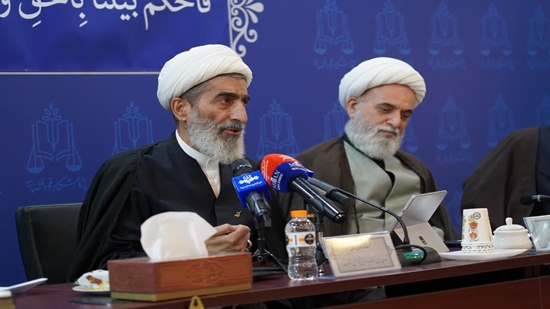
According to the Public Relations Department of the Quran and Hadith Research Institute, Hojjat al-Islam wa al-Muslimin Dr. Hadi Sadeghi, Head of the Theoretical Ethics Department at the Quran and Hadith Research Institute, spoke at the academic session entitled “Commemorating the Theological Thought of Martyr Ayatollah Dr. Beheshti (may he rest in peace).” Commemorating Judiciary Week and the anniversary of the martyrdom of Ayatollah Beheshti and 72 of his companions, he stated:
“Martyr Beheshti was an exceptional figure who brought thought and action together in his person. He was an outstanding thinker in the fields of theology, politics, society, and the judiciary; at the same time, he was a capable administrator, a dedicated fighter, an enlightened figure, and an outstanding analyst.”
He added:
“What distinguished Martyr Beheshti above all was his broad-mindedness, his ability to tolerate opposing views, and his political ethics. Although liberal groups, communists, and rigid traditionalists all opposed him and launched the harshest attacks on his character, he dealt with his opponents calmly, graciously, and with a smile, and never deviated from his course.”
Hojjat al-Islam wa al-Muslimin Dr. Sadeghi referred to the injustice suffered by Martyr Beheshti, stating:
“If his martyrdom had not occurred, perhaps the greatness of his character and thought would not have been recognized as it deserved. As Imam Khomeini (may he rest in peace) stated, the injustice inflicted upon Martyr Beheshti was even more painful than his martyrdom.”
Emphasizing that Martyr Beheshti’s thought has not yet received the scholarly attention it deserves, the President of the National Dispute Resolution Center said:
“If we analyze the works of this figure through rigorous scholarly methods, we will discover a treasure trove of profound and authentic concepts. Martyr Beheshti was a thinker who explained doctrinal foundations with the aim of building both individuals and society. His theology was not merely theoretical; it was a theology oriented toward action and human transformation.”
He continued:
“In Martyr Beheshti’s works, monotheism is not merely a theoretical discussion; rather, it is the foundation of responsibility, freedom, justice, social participation, and the struggle against oppression. He viewed the human being as a being in the process of ‘becoming,’ who shapes the path of their own development through free will and freedom. On this basis, he regarded freedom as a prerequisite for the growth of both individuals and society.”
He stated:
“From Martyr Beheshti’s perspective, justice is the ultimate goal of Islamic government, not the acquisition or preservation of power. Power is merely a means of establishing justice and creating the conditions for human growth and development. Islamic government acquires meaning only when the people play an active role in administering society.”
Referring to Martyr Beheshti’s views on religious democracy, Hojjat al-Islam wa al-Muslimin Dr. Sadeghi said:
“Contrary to certain interpretations, Islamic government in Martyr Beheshti’s view is not authoritarian. Rather, it is founded on public participation, legitimate freedoms, and social responsibility. People must have a role in decision-making and the administration of society so that the conditions for their growth and development can be secured.”
The Deputy Head of the Judiciary emphasized that Martyr Beheshti did not understand justice merely as the distribution of wealth; he also stressed the fair distribution of opportunities and believed that justice could not be sustainable without freedom. He further maintained that achieving justice is the responsibility of all members of society, not merely the government or the judiciary.
Referring to the Supreme Leader’s recent message on the occasion of Judiciary Week, he added:
“One of the most important demands expressed by the Leader of the Islamic Revolution was the implementation of justice without discrimination and the prevention of personal connections and recommendations from influencing judicial proceedings. If people come to believe that connections and influence can take the place of justice, social capital and public trust in the judiciary will be undermined. Therefore, safeguarding judicial independence and strengthening public confidence are among the judiciary’s most important responsibilities.”
It is worth noting that the event entitled “Commemorating the Theological Thought of the Martyred Ayatollah Beheshti (may he rest in peace)” was held on Monday, 8 Tir 1405, from 9:30 a.m. to 11:30 a.m., at the Conference Hall of the Judicial Research Institute in Tehran. The event was attended by and featured speeches from Hojjat al-Islam wa al-Muslimin Dr. Hadi Sadeghi, Deputy Head of the Judiciary and President of the National Dispute Resolution Center; Hojjat al-Islam wa al-Muslimin Dr. Reza Berenjkar, President of the Quran and Hadith Research Institute and Head of the Association of Islamic Theology of the Seminary; Hojjat al-Islam Dr. Seyyed Ali Hosseinizadeh, faculty member of the Quran and Hadith Research Institute; Hojjat al-Islam Dr. Mohammad Jafar Rezaei, faculty member of the Quran and Hadith Research Institute; and Dr. Ali Kazemi, Head of the Judicial Research Institute.
To receive news and programs from the Research Institute of the Quran and Hadith via the Eitaa messenger:
https://eitaa.com/quran_hadith
Original Source of the News
